What's New I Sitemap I Bibliography I Vortigern Studies l POLLS I LINKS l Games I Sitemaster |
 |
Vortigern Studies > Fectio > RomanShows > Houten 2007 (1) |
Fectio Index
|
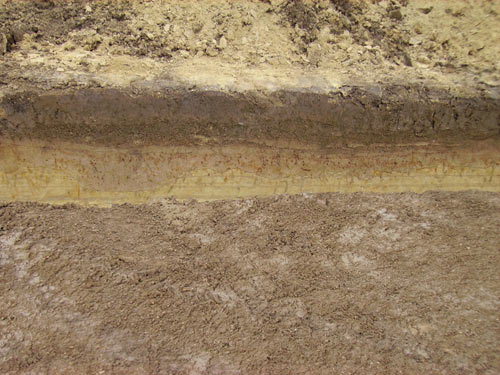
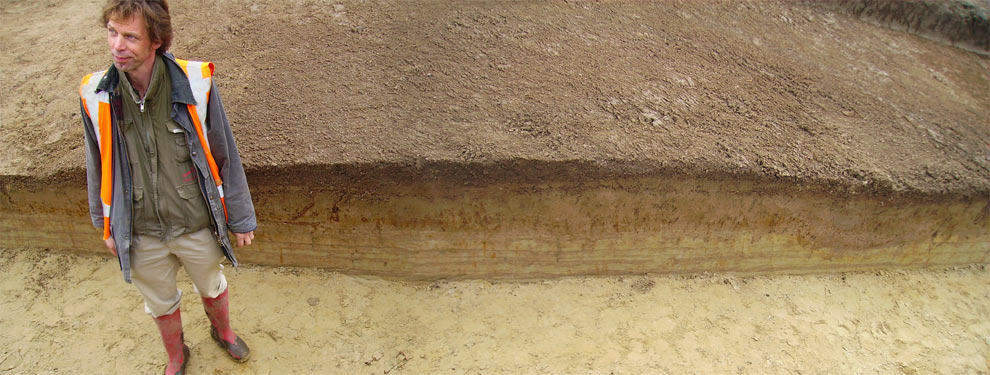
The road itself is no big affair. No layer upon layer of stone forming a mighty dam, none of that.
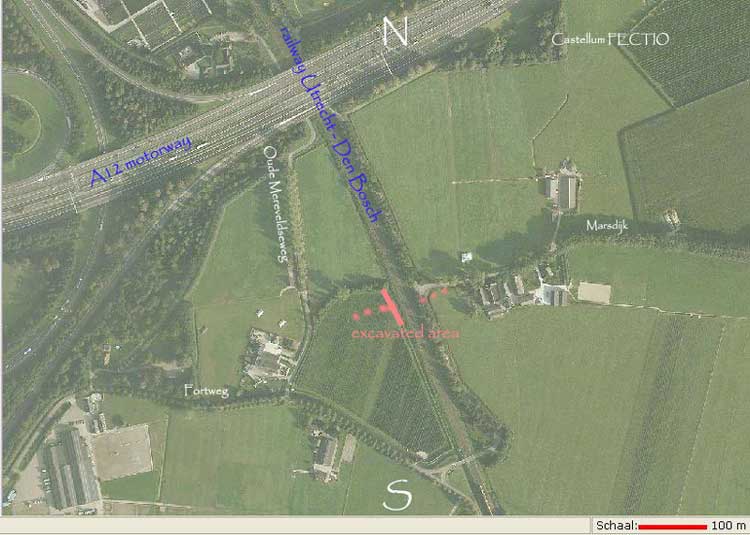
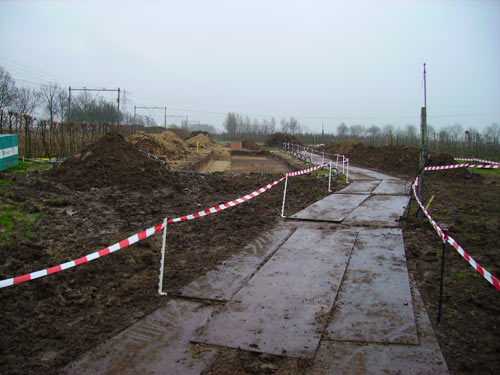
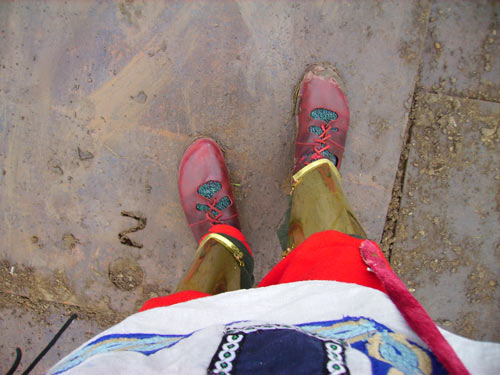
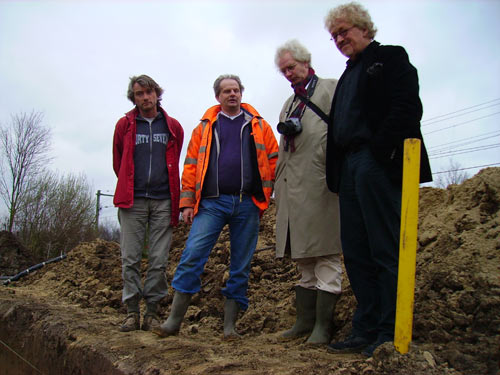
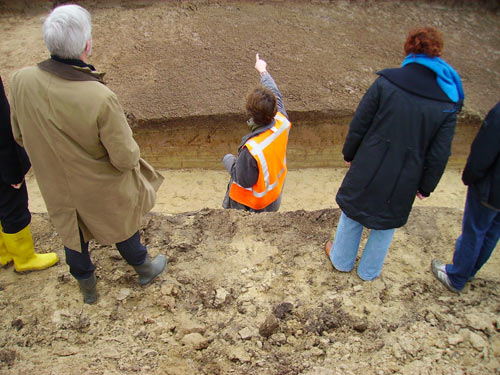
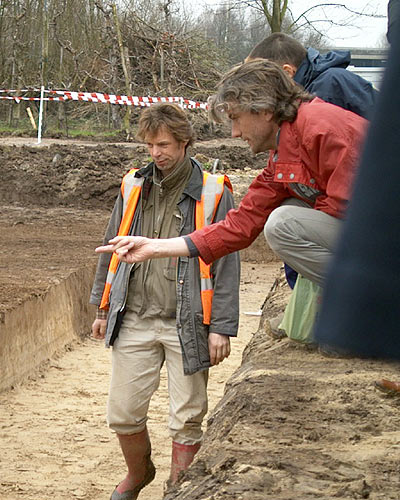
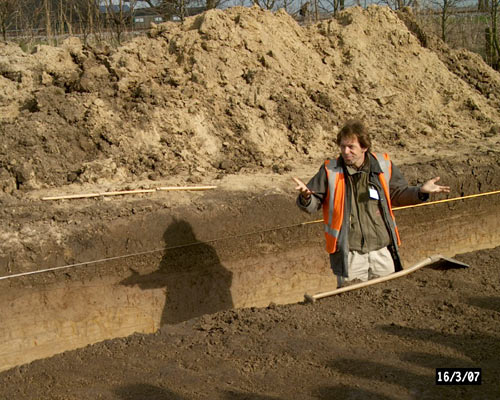
This is by no means the only Roman site in Houten. Most, unfortunately, are invisible (as the road no doubt will be later this year). However, look here for a Roman funeral monument, found and displayed in Houten. The site could be classified as ‘a big hole in a pool of mud’. Or it was at least that morning, after a week of rain. The fields, which slope down a bit towards where the river once flowed, were kind of soaked, and the mud on the metal plates that formed a track to the site, clung to my soles, making every step a slippery adventure. Surprisingly, the road lies just 50 cm under the field. For a river valley that’s kinda odd, one would suppose that some more sediment would have been added in the meantime. Apparently not, or maybe the road had been in use after the Roman period. A tantalising though, also because it seems that the alignment is similar to that of the modern Marsdijk, which runs south of the original castellum Fectio, and which may indeed form the continuation of the old Roman road itself. Future research will hopefully establish that. Another, minor, road was found to the north, covered with shells only, which might be an earlier road or the road to the castellum itself.
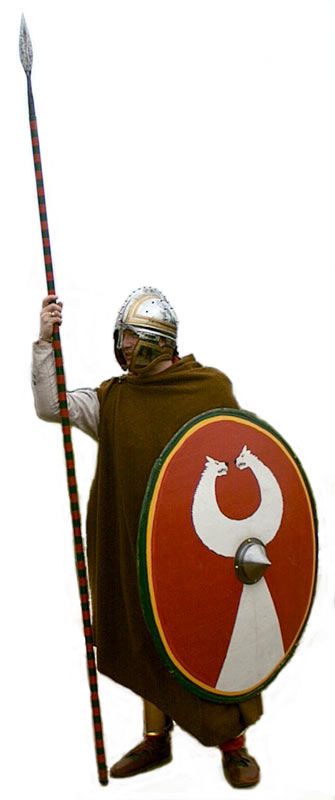
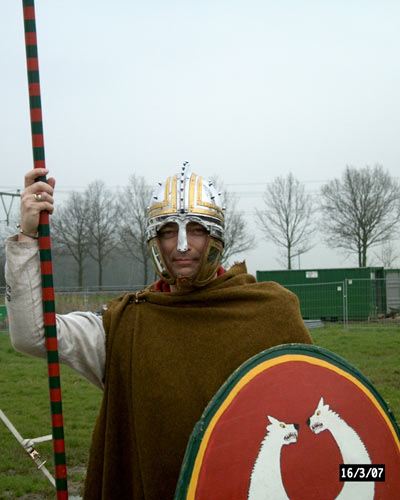
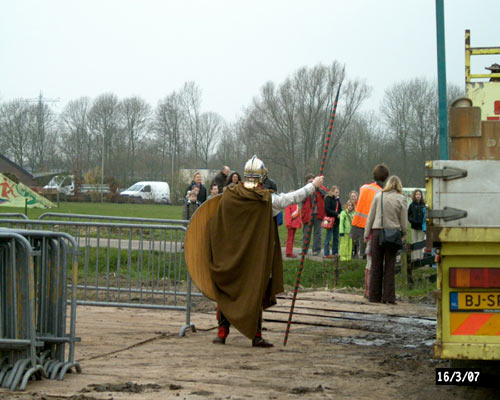
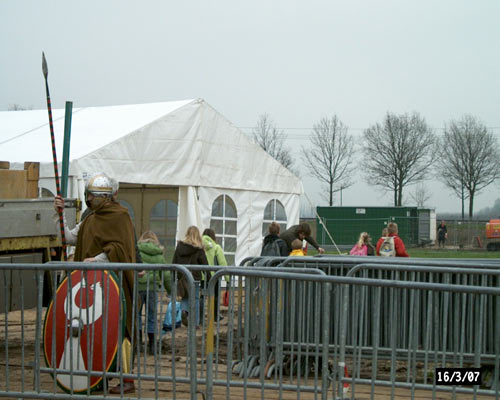
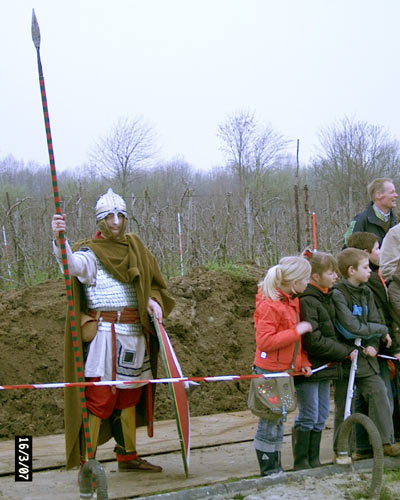
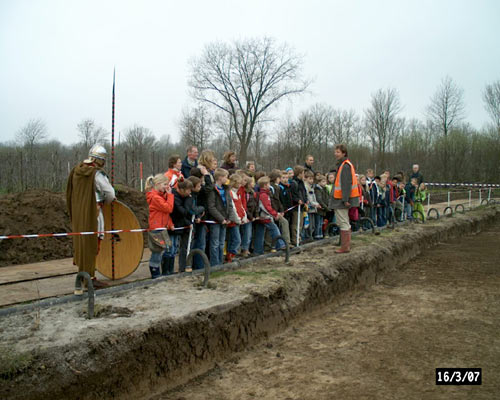
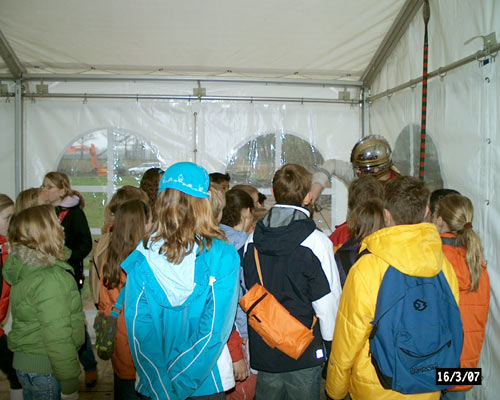
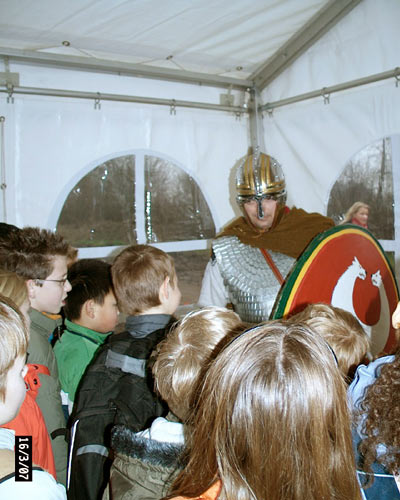
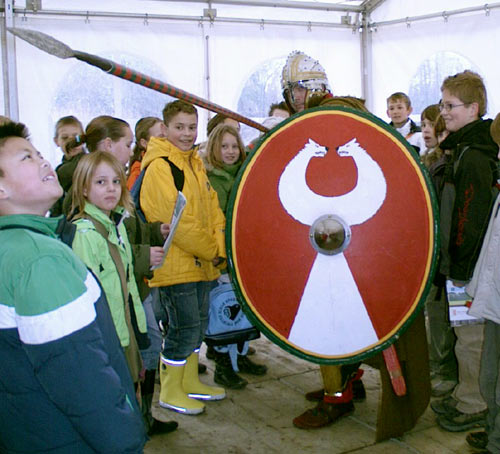
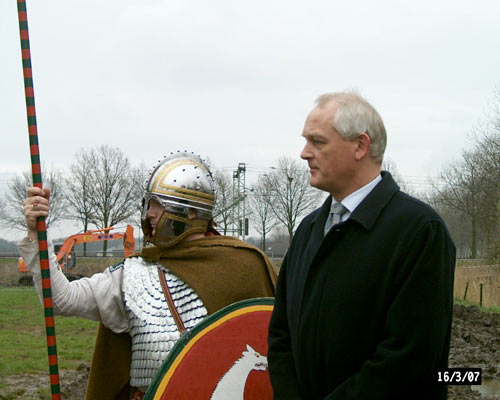
The event nearly passed me by because originally I had been scheduled for the Open Day for the general public. However, when a school visit fell through it was decided at the last minute (almost) that I should turn up on Friday, to accompany the visitors from the school and the Council. The school came first, two classes of group 6 (9 to10 year olds) from a local school called De Vlinder (The Butterfly), who had been prepared through a project and had been told about Roman times twice before, so I was number three. Nonetheless, it seemed they had not met a heavy infantryman before, which apparently they thought was a nice surprise.
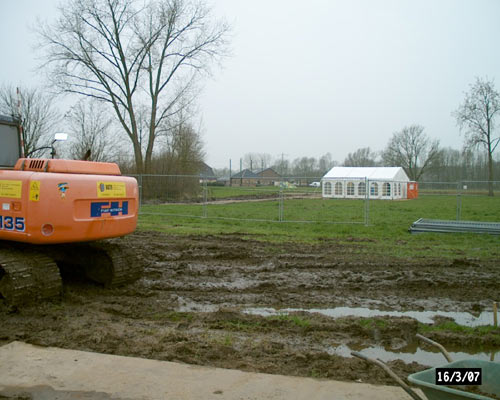
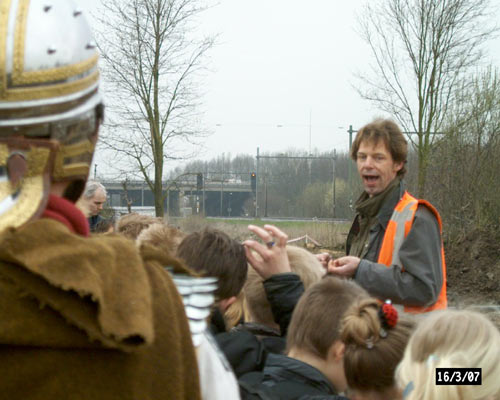
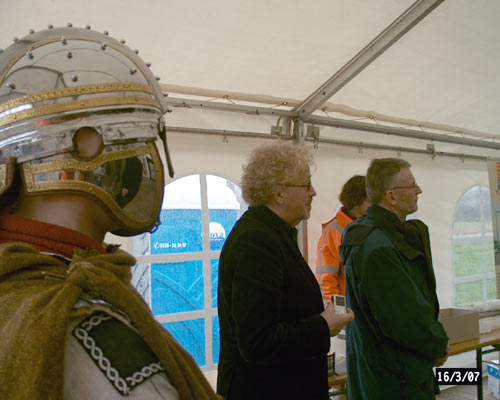
The kids were shown around the dig site and I slithered along, sometimes almost losing my footing on the mud-covered metal plates which were used as a temporary path. Cees Koot did a good job answering their questions, which were of course different from the ones he would be asked normally. I think they enjoyed their visit very much. Afterwards we went back to the tent where ProRail had a small exhibition. The kids then completely backed me into a corner asked all kinds of questions. Quite fun.
After the school had gone, it was time for the officials. The mayor and complete Council of Houten, plus many of the top civil servants came to have a good look at what was dug up in their County. They were accompanied by the responsible people from ProRail and the archaeologists from Vestigia, who carried out the dig (http://www.vestigia.nl/) and other projects. Of course this visit was quite a bit different than the one we just saw before. Cees Koot again explained in detail was there was to be seen in the trench, and everybody was quite interested in what was visible, and what was not, and why. Some had fully expected a real Roman road, complete with hard shoulder and speed bumps, and were a bit disappointed when all there was to see was a profile of gravel, no matter how interesting for the experts! Wilfried Hessing (Vestigia) held a small presentation afterwards, explaining what the Romans had done in these parts and what we still (want to) find of that activity. I like that final gesture of Cees Koot though: "sorry, but we don't have a clue".. |
 |
VortigernStudies is copyright © Robert Vermaat 1999-2007. All rights reserved |